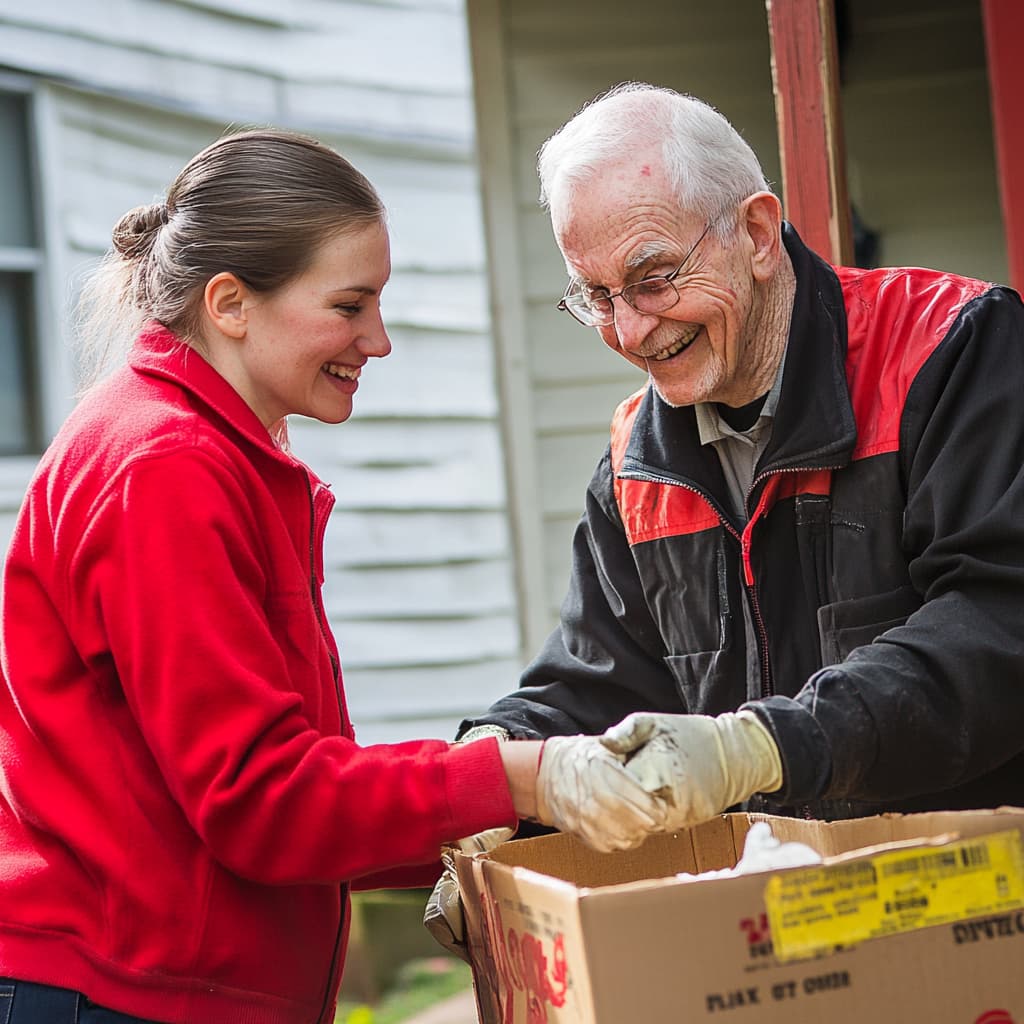
Volunteering, the act of freely giving time and labor for the benefit of others. It remains one of the few civic behaviors that cuts across class, ideology, religion, and nationality.
Yet volunteering is not merely a moral gesture or charitable impulse. It is a social institution with deep historical roots. Let’s dig deeper.
What Is Volunteering?
The Etymology of “Volunteer”
The word volunteer derives from the Latin voluntarius, meaning “of one’s free will.” It entered English in the early 17th century through French (volontaire) and originally referred to individuals who freely enlisted for military service rather than being conscripted.
Only later did the term expand beyond the battlefield to describe civilian service, humanitarian aid, and social welfare.
At its core, volunteering is unpaid, non-compulsory work performed for the benefit of individuals, communities, or society at large. Unlike informal helping — such as assisting a neighbor — it typically occurs through organizations, whether nonprofits, faith groups, schools, or international agencies.
The key elements are free will, lack of financial compensation, and public or social benefit. Volunteers may gain skills, social recognition, or emotional fulfillment, but these are secondary outcomes rather than the primary motivation.
Historical Origins: Before the Modern State
Long before the word existed, the practice did. Forms of free will service can be traced to ancient civilizations. In classical Greece and Rome, civic participation — maintaining roads, public spaces, and local defense — was often performed without direct payment as a duty of citizenship.
Religious traditions played an especially powerful role. In Judaism, Christianity, Islam, Hinduism, and Buddhism, charitable acts and service to others were framed as moral obligations. Medieval monasteries and religious orders organized care for the poor, sick, and travelers, functioning as early welfare institutions long before the rise of the modern state.
In the 18th and 19th centuries, it became more formalized. The Industrial Revolution created new urban problems — poverty, child labor, disease — that governments were slow to address. Philanthropic societies, abolitionist groups, women’s associations, and educational charities emerged to fill the gap.
The Rise of Civil Society
The modern concept is inseparable from the development of society.
Organizations such as the Red Cross, founded in the mid-19th century, institutionalized humanitarian volunteering on an international scale. During the two World Wars, mass volunteer mobilization supported medical care, civil defense, and reconstruction efforts.
In the postwar period, it increasingly intersected with ideas of democracy, citizenship, and social cohesion. Governments began to recognize that free will labor not only supplemented public services but also strengthened community resilience and social trust.
Volunteering by the Numbers
Globally, hundreds of millions of people help freely each year.
In many developed countries, roughly one-quarter to one-third of adults report volunteering annually through formal organizations. The economic value is substantial: estimates consistently place it in the trillions of dollars globally.
It is especially prominent in sectors such as social services, education, health care, disaster response, sports, and environmental protection. During crises — from natural disasters to refugee influxes — participation often spikes.
Why People Volunteer
Motivations are complex and often overlapping. Surveys consistently identify several core drivers:
- Altruism: a desire to help others or contribute to the common good
- Community belonging: social connection and shared purpose
- Identity and values: expressing moral, religious, or civic commitments
- Skill development: gaining experience, especially among young people
- Psychological well-being: reduced loneliness and increased life satisfaction
Importantly, it is not purely selfless nor purely instrumental. It occupies a middle ground where individual benefit and collective good coexist.
The Changing Face of Volunteering
Today it looks different than it did a generation ago. Long-term, weekly commitments are declining in many countries, replaced by episodic, project-based, or micro-volunteering opportunities. People are more likely to volunteer intensively for short periods rather than consistently over years.
Digital platforms now match volunteers with causes in real time. Social media amplifies visibility, sometimes turning it into a performative act — but also expanding access and awareness.
Younger generations, in particular, tend to prefer volunteering that aligns closely with personal values, offers measurable impact, and fits flexible schedules. They are less loyal to institutions but often deeply committed to causes.
More Than Free Labor
Any good act satisfies a fundamental human impulse: the desire to matter beyond oneself. It reminds societies that not all value is priced, not all labor is commodified, and not all social bonds are contractual.
In that sense, it is about preserving the idea that collective life depends, at least in part, on what people choose to give — even when they are not required to do so.
At the same time, it cannot replace structural solutions. It supplements — but does not substitute for — effective public policy, social safety nets, or institutional accountability. When governments rely too heavily on unpaid labor to fill systemic gaps, it risks becoming a quiet endorsement of inequality.